
Sixty-five percent of children beginning primary school today will eventually enter careers that do not yet exist. The magnitude of that reality reverberates across classrooms, boardrooms, and policy chambers. It signals an era in which the velocity of change surpasses the capacity of traditional systems to prepare individuals for the workforce ahead.
While industries undergo relentless cycles of innovation—adopting automation, digitization, and advanced analytics—many educational structures remain anchored to antiquated templates. Curriculum reform moves slowly; market demands shift quickly. The mismatch widens each year, creating an urgent need for new mechanisms that can bridge the divide.
Technology has evolved from a supplementary resource to an indispensable connective framework. It democratizes access to learning, expands pathways to employment, and elevates every learner with the potential to participate in a digital-first economy. With the right deployment, it transforms the architecture of opportunity itself.

The Gap Defined
The Access Gap
The global education landscape is marked by stark inequities. Students in economically strained regions often confront schools without laboratories, computers, or qualified instructors. Remote communities battle geographic isolation, where the nearest institution may be hours away. Economic hardship further restricts mobility and access to digital tools. The result is an uneven terrain in which intellectual potential is abundant, but opportunity is rationed. Over time, limited access aggregates into systemic disadvantage, curbing aspirations before they can mature.
The Skills Gap
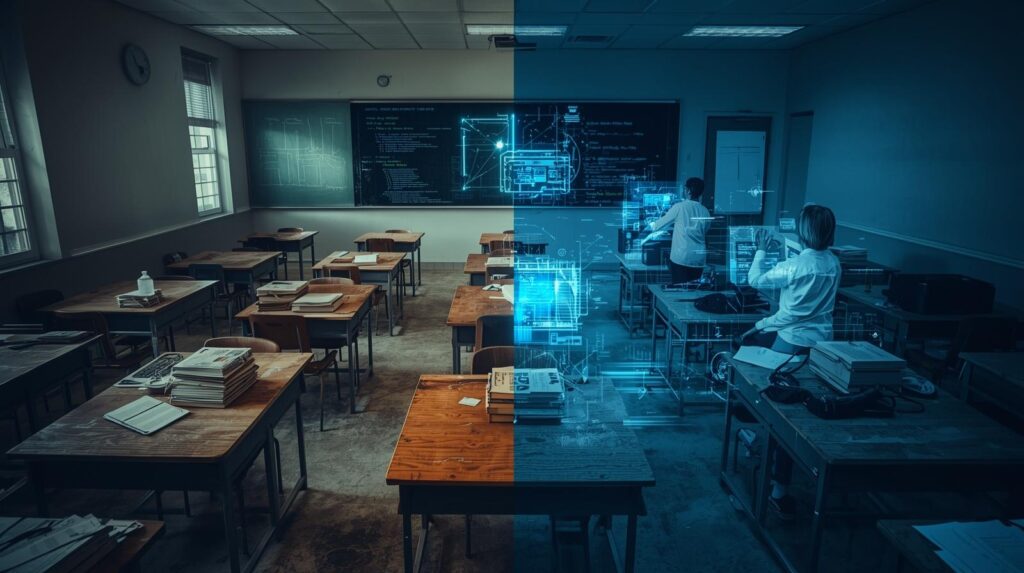
Modern employers prioritize skills rooted in agility, digital comprehension, and problem-solving over rote memorization. Yet classrooms still emphasize standardized testing, static syllabi, and conventional instruction. The discrepancy between what learners acquire and what industries require continues to widen. Emerging fields such as machine learning, cybersecurity, and data science demand competencies that traditional schooling rarely integrates. This gap not only leaves graduates underprepared—it also costs companies productivity, innovation, and competitive advantage.

The Opportunity Gap
Talent is evenly distributed; opportunity is not. Urban centers boast dense networks of employers, incubators, and professional communities. In contrast, individuals in rural or developing regions often encounter limited job prospects, regardless of their qualifications. The geographic divide restricts mobility, leaving vast reservoirs of skilled individuals disconnected from industries that would readily employ them. This imbalance perpetuates cycles of underemployment while businesses elsewhere report shortages of capable workers.
III. Bridge Pillar 1: Democratizing Education (EdTech)

MOOCs and Online Learning
Massive Open Online Courses have dismantled long-standing educational hierarchies. Universities that once restricted access to select cohorts now distribute knowledge across continents. Learners gain entry to instruction from leading experts, studying complex disciplines on their own schedules. In effect, a digital commons of global knowledge has emerged, unbound by campus walls and unconstrained by tuition costs.

Personalized Learning
Adaptive learning systems mark a transformative departure from traditional pedagogy. Instead of uniform pacing, algorithms interpret each user’s learning behavior—detecting strengths, identifying gaps, and recalibrating content accordingly. The result is a highly individualized journey in which learners progress at a rhythm that aligns with their cognitive patterns. Such customization helps struggling students recover foundational skills and enables advanced learners to accelerate without constraint.

Gamification
Gamification introduces a sense of momentum into education. Challenges, points, and narrative elements stimulate focus. Immediate feedback enhances retention. Students become active participants rather than passive recipients, and learning evolves from obligation into engagement. When combined with rigorous academic content, gamified frameworks can heighten determination, reduce anxiety, and build intellectual stamina.
IV. Bridge Pillar 2: New Pathways to Employment

Micro-credentials & Digital Badges
The modern labor ecosystem values demonstrable expertise over generalized degrees. Micro-credentials offer concise, targeted instruction aligned with industry-specific skills. Digital badges verify mastery in areas such as project management, UX design, data analytics, and cloud engineering. These compact pathways allow individuals to retool rapidly, pivot careers, or advance within specialized domains without the long horizon of traditional study.

Virtual Internships & Mentorships
Virtual professional experiences decouple opportunity from location. Students can join global teams, work on real-world assignments, and receive mentorship from professionals thousands of miles away. This digital proximity cultivates cross-cultural collaboration and exposes learners to industry practices that would otherwise remain inaccessible. It levels the playing field and widens professional visibility for those historically excluded.
Portfolio over Pedigree
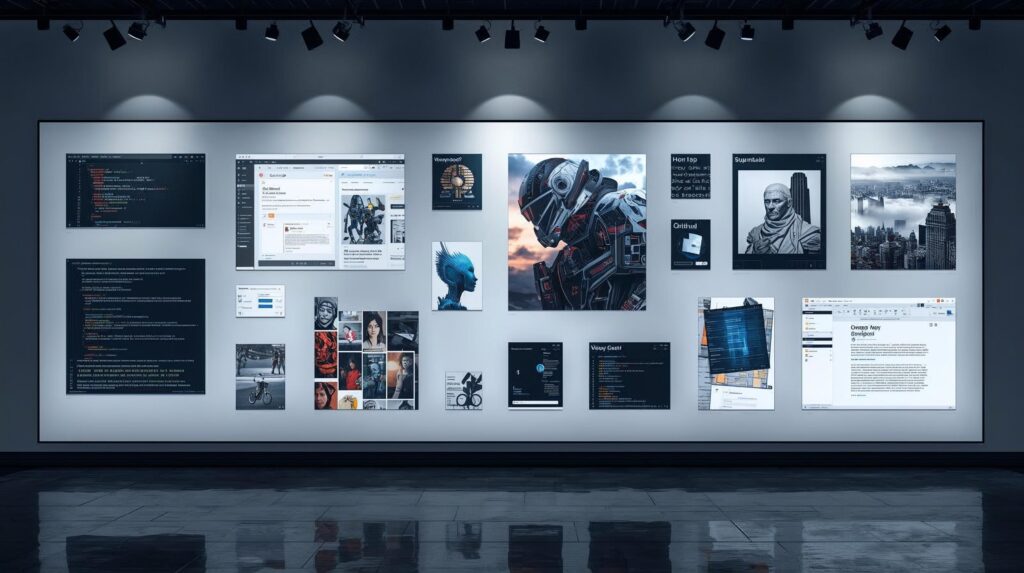
Technological platforms enable merit to speak for itself. A developer’s GitHub repository, a designer’s Behance profile, or an engineer’s prototype archive often reveals far more than a résumé. Employers increasingly prioritize authentic output—what a candidate can conceptualize, construct, and deliver. This shift benefits self-directed learners, career changers, and those who thrive outside traditional academic pathways.
V. Bridge Pillar 3: The Remote Work Revolution

Location Independence
The proliferation of remote work has reconfigured the geography of employment. Collaboration platforms and cloud-based workflows empower teams to operate across continents with remarkable cohesion. Talent pipelines are no longer restricted by borders or urban concentration. Companies tap into global expertise; workers access global employers. The workplace becomes a network rather than a location.

The Gig Economy
The gig economy offers immediate entry into the labor market. Individuals can monetize skills without navigating the formalities of traditional hiring. Freelancers build client portfolios, refine their craft, and maintain autonomy over schedules and income. This fluid model accommodates those seeking supplementary income, flexible arrangements, or independent careers untethered from corporate structures.
VI. Challenges and Considerations (The Digital Divide)

Infrastructure Issues
For all its promise, technology’s impact depends on a stable foundation. Many regions lack broadband access, computers, or training in digital navigation. Without these essentials, learners are excluded from the very systems designed to empower them. Addressing the digital divide requires robust infrastructure investment, community training, and policies that prioritize universal connectivity.

The Human Element
Even the most sophisticated technologies cannot replicate the full spectrum of human capability. Leadership, empathy, ethical reasoning, and interpersonal communication remain indispensable. Education must integrate digital fluency with emotional intelligence, ensuring that learners emerge both technologically competent and socially adept. Technology should enhance human strengths, not eclipse them.
VII. Future Outlook

AI and Automation
Artificial intelligence will accelerate workforce transformation. New sectors will emerge, while repetitive tasks will be automated. This evolution necessitates perpetual learning. Workers must diversify skills, adapt to evolving roles, and cultivate resilience in an environment defined by continuous reinvention. Those who embrace lifelong learning will navigate this transition with agility and advantage.
VR/AR in Training
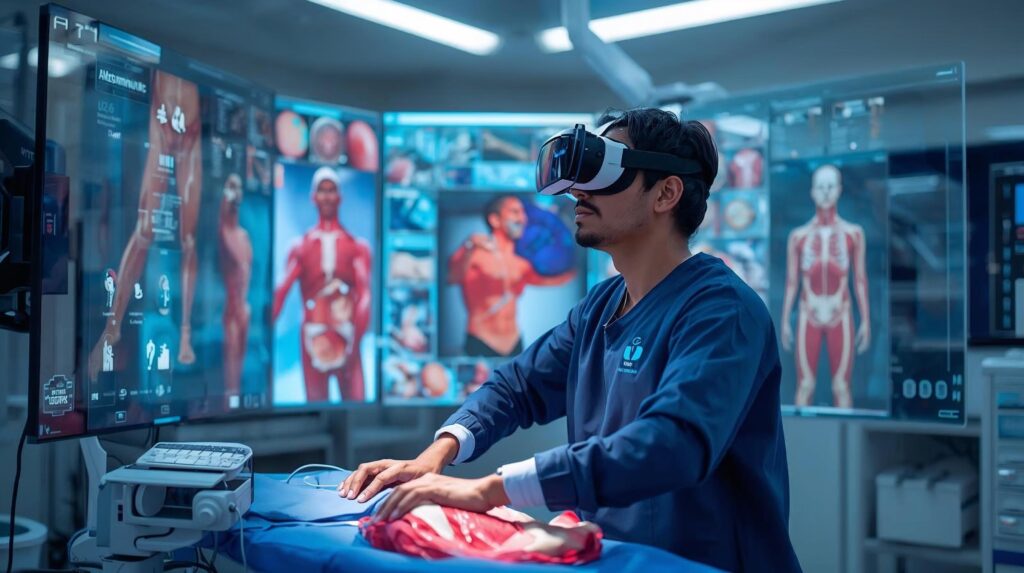
Immersive technologies promise to redefine how vocational skills are acquired. Simulated surgery, architectural modeling, advanced manufacturing, and emergency response training can all occur within controlled virtual environments. Learners practice complex tasks without risk, refining proficiency through repetition and exploration. These tools compress learning cycles and expand experiential access for aspiring professionals.

VIII. Conclusion
Technology is binding together the disparate realms of education and employment, stitching access to skills, skills to opportunity, and opportunity to global participation. It is reshaping how individuals learn, work, and imagine their futures.
But progress does not occur through infrastructure alone. The real momentum comes from human ingenuity—the willingness to adapt, to explore, and to push beyond familiar boundaries. Those who step forward, guided by curiosity and ambition, will define the next era of work.
Take the next step. Enroll in an online course. Strengthen your digital presence. Advocate for broader digital access in your community. The bridge is built. Walk it.